


Reviewed by Jamie Michele for Readers’ Favorite
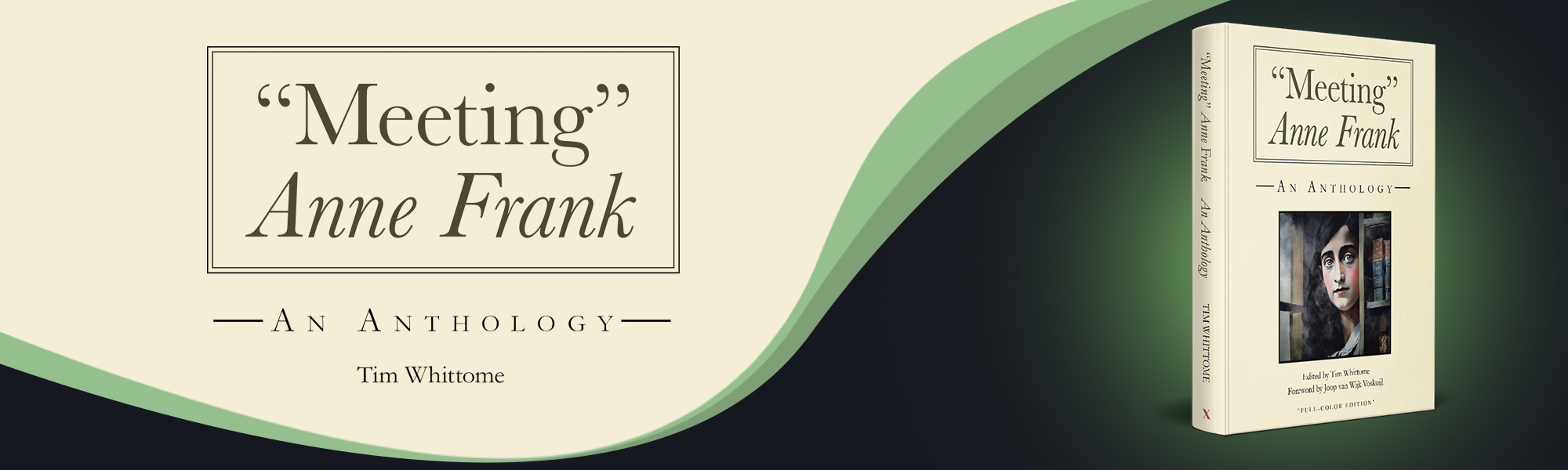
“Meeting” Anne Frank: An Anthology by Tim Whittome is a compilation of history, photography, and discussions by dozens of people who have been touched in their own way by Anne Frank and her story. Among them, Yvonne Leslie remembers a paperback of The Diary of a Young Girl in an Oregon school library during 1969, and later reading Anne Frank’s diary while living in rural Arizona after finding Ernst Schnabel’s book about her. Noreen Simpson recalls an English teacher in Belfast mentioning Anne Frank during her teenage years, which led her to read the diary and later travel to Amsterdam, where she visited the Anne Frank House and the Frank family apartment at Merwedeplein. Anne Talvaz describes learning about the war through a television documentary in France, after which she read Anne’s diary, studied Dutch, and eventually visited the Anne Frank House during a family trip. Tim Whittome’s “Meeting” Anne Frank gathers a wide range of historical material and contributions connected to Anne Frank, giving readers loads of details that expand our understanding of her life and the preservation of her legacy.
I love that Whittome shows Frank’s impact on ordinary people who are so attuned to her that they “meet” her in their own unique ways. Every essay is conversational, the standout to me being an interview with Miranda Antoinette Troutt, who portrayed Anne Frank in a Children’s Theatre production, with preparation for the role that included meeting with a Holocaust survivor who knew Margot Frank during childhood. The photography strengthens the stories. Ellen Roberts contributes a photograph of the memorial dedicated to Anne Frank and Margot Frank at Bergen Belsen, and Ryan Cooper appears in a photograph standing with Otto Frank while holding the original manuscripts of Anne Frank’s diary. Overall, this is a unique and fascinating compilation. Very highly recommended.
Reviewed by Carol Thompson for Readers’ Favorite
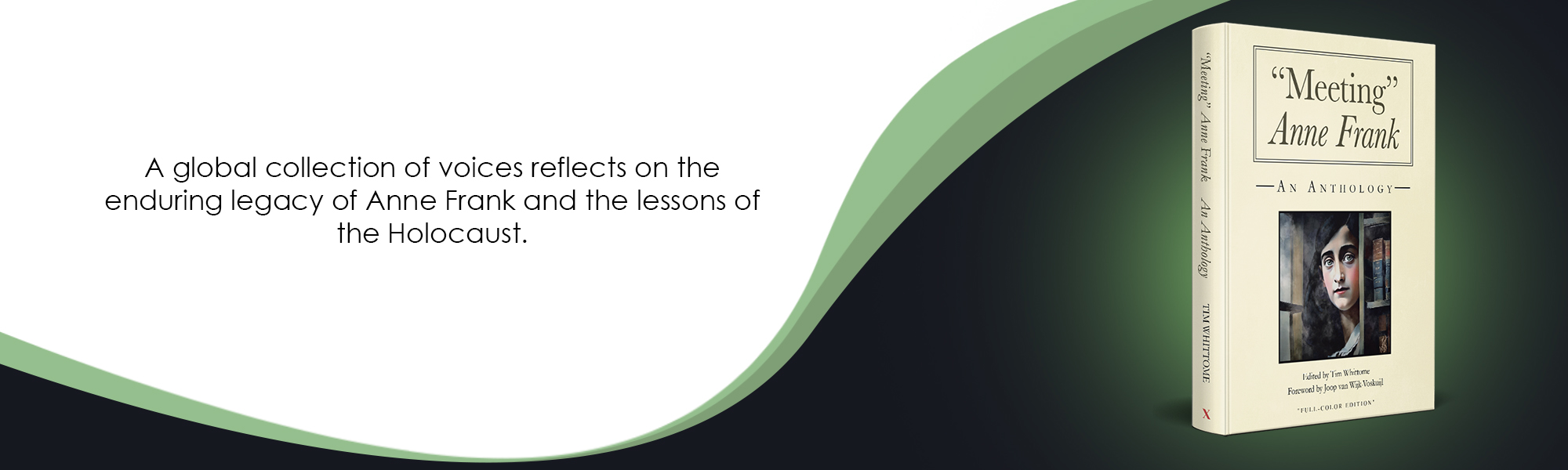
“Meeting” Anne Frank: An Anthology, edited by Tim Whittome, compiles a diverse range of voices exploring the life, legacy, and enduring impact of Anne Frank through essays, reflections, interviews, and historical context. The collection begins with background on Anne’s early years, her family, and the events leading to their hiding in Amsterdam during the German occupation. It traces her journey from childhood to the Secret Annex, and then through arrest, deportation, and the tragic final chapters of her life. The anthology then goes beyond biography, analyzing the different versions of Anne’s diary and how her words have been preserved and interpreted over time. Contributors from various countries share personal stories, describing how they encountered Anne through reading, travel, performances, or study. The book also features interviews with those who have portrayed Anne on stage, along with reflections from visitors to key locations in Amsterdam.
The book is written in a style that combines historical detail with personal reflections, creating a rhythm that alternates between informative passages and heartfelt responses. The pacing allows each contributor to share their perspective while maintaining a cohesive structure that guides the reader from context to interpretation. The essays are engaging and introspective, and the accompanying photographs, interviews, and firsthand accounts add variety and keep the book dynamic. Readers who enjoy history, memoirs, and literary reflections will find “Meeting Anne Frank” an excellent read. Those interested in how stories continue to influence our understanding over time will appreciate Tim Whittome’s efforts. The book may also appeal to educators, students, and anyone interested in narratives of memory and identity that offer knowledge and reflection.
Reviewed by Grant Leishman for Readers’ Favorite
The principal section of “Meeting” Anne Frank: An Anthology, edited by Tim Whittome, is a collection of essays from twenty-three contributors who outline the impact Anne Frank and her amazing diary have had on their lives. Anne Frank left behind a legacy that has fascinated millions. After the war, her father, Otto Frank, published a version of Anne’s diary that she had written whilst in hiding in Amsterdam. That diary became both an inspiration to millions and a controversial document that still stirs debate, numerous books, plays, movies, and discussion, some eighty years later. Tim Whittome has been fascinated with Anne Frank for decades and has lovingly reproduced and expanded his initial book “Meeting” Anne Frank into this impressive, scholarly collection of personal recollections of what Anne’s diary, her life, and her death have meant to the many contributors. The essayists come from all walks of life, all social strata, and include Jews as well as Gentiles. What they all have in common is their incredible love for and respect for Anne and the incredibly hopeful words she wrote as a teenager.
I appreciated that the essayists and the editor used the story to highlight the absolute atrocities of the Nazi regime and their silent supporters. In a world that is increasingly becoming polarized in political opinion, we must never forget what happened to Anne, to six million Jews, and not forget the disabled, the gypsies, the homosexuals, and the other unwanted in the Aryan masterplan. It happened once, and Anne’s diary reminds us that it can never be allowed to happen again. I was really pleased that such attention was also given to Anne’s older sister, Margot, whose diary was never found and who ultimately lived and died in the shadow of Anne’s words. It is evident that she, as well as Anne’s mother, played a greater role in the life of the young teenager than her words may have indicated. The photographs, especially the color photographs, add immensely to the reader’s understanding of life in Amsterdam at the time of the Nazi occupation. “Meeting” Anne Frank is a wonderful addition to the wealth of material written about Anne Frank and a great read for all aficionados of that historical period. I enjoyed this book, especially the detailed explanatory footnotes and bibliography. Highly recommended.
Diane Donovan, Sr. Reviewer, Midwest Book Review
The revised, updated second edition of “Meeting” Anne Frank: An Anthology is a key acquisition for libraries interested in Anne Frank history, appearing in full color to support the collection of personal stories and insights about Anne with a visual strength that gives the book further depth. The inclusion of additional essays by Anne Talvaz, Joy Gafà, and Priscilla Smits which were inspired by the author’s trip to Amsterdam, further broadens the perceptions, insights, and experiences of Anne Frank for audiences interested in how the young girl’s life continues to impact generations who never met her.
Why a second edition? The inclusion of powerful, hard-hitting color images would have been enough justification for this reprint, but augmenting these images are further reflections and information that stemmed from editor Tim Whittome’s research, which led him to desire “to include more of my reflections on not just the lives and legacies of Anne and Margot Frank as teenage victims of the Holocaust but also on the wider impact of the Nazi occupation on the Dutch following the German invasion of the Netherlands in May 1940. I have drawn impressions and reflections from having read over fifty new memoirs, histories, and other critical studies since I first edited “Meeting” Anne for eventual publication in 2021.”
Given his expanded studies and focus, the second edition of “Meeting” Anne Frank: An Anthology represents a true value in its wider-ranging inclusion and consideration of the forces that Anne’s presence in the world created, which continue to resonate in many unexpected ways today.
Chapters come from many thinkers and social engagers, including Italian charity founder Federica Pannocchia, who reflects:
One of my favorite quotes of Anne Frank is, “How wonderful it is that no one has to wait, but can start right now to gradually change the world!”158 And I do believe that this quote has become my motto. In my organization, we also focus on children in need and actual issues like migrants and refugees. We focus on all those people who are still discriminated against today.
We can choose what to do with our lives, how to react. We can choose to love and not to hate.
We can choose to live and to help.
We can choose to start to improve our world.
Each essay takes a segment of Anne’s lasting influence and writing and places it in a perspective and place that most readers won’t expect. This, in turn, creates a joyful expansion of Frank’s impact on future generations that readers will find ultimately hopeful and uplifting – perfect panaceas for modern times, and wonderful instructions for how to not just survive, but thrive.
This is why libraries will want to consider this second edition an essential acquisition – especially those that may have purchased the prior, more limited edition and have seen its popularity among patrons and reading groups.
Packed with extraordinary insights into Frank’s lasting legacy, the second edition of “Meeting” Anne Frank: An Anthology is a powerful celebration not to be missed.